- Market Minute
- Posts
- Oil Over $100 With No End in Sight
Oil Over $100 With No End in Sight

Oil has spiked over $100/barrel, at one point hitting above $119, a price untenable for global economies, as Iran shows no signs of surrender. Not only that, the conflict is widening – the latest expansion is NATO reportedly intercepting an Iranian ballistic missile in Turkish airspace. President Trump said $100 crude is “a very small price to pay” for “Safety and Peace,” dashing trader hopes that the spike could be addressed quickly.
The Strait of Hormuz has basically closed, despite President Trump offering insurance and marine escorts for oil tankers. This means that any oil production in the Middle East has to go into storage, and they’re already running out of space. Multiple OPEC countries, including Saudi Arabia, are reducing their outputs – and refineries all over the Middle East are being attacked, interrupting production.
The EIA estimates the total world petroleum supply was 104.4 million barrels per day in the first half of 2025. That demand beat all of 2024, and has steadily risen every year. Further, the EIA estimated that of that, 76% traveled by seaborne trade. Around 25% of total supply passes through the Strait of Hormuz.
This comes at a bad time for energy markets in general, with U.S. sanctions on Russian energy and Venezuela picking up the pieces of its own energy sector. Coupled with AI’s extreme electricity demands, the existing system is going to struggle if prices remain this high and supply isn’t rerouted effectively.
The G-7 reportedly will discuss a possible joint release of oil reserves today, and the U.S. may grant waivers for Russian oil or ease its sanctions, but nothing is certain. Goldman Sachs estimates we now have a deficit of 20 million barrels per day in the oil markets.
A sustained price jump would be bad news for the U.S. economy and will put the Fed in a difficult position. After we saw a shock job loss on February’s employment report last week, there seemed like there was more room for the Fed to cut rates to support the labor market. However, if gas prices push inflation higher, the odds of a rate cut lessen. This push and pull could signal the dreaded “stagflation” scenario.
Uncertainty is hitting global markets as well, with money pulling out of Asian emerging markets, bond markets are falling, equities have lost $6T in a global sell-off (per Bloomberg), and private credit is showing strain. Things seem to be reaching a fever pitch, and it’s hard to know where we’ll go from here. Don’t forget, it’s a midterm election year, which often leads to increased market volatility as well.
Tune into the Schwab Network for the latest on oil and other breaking news.
Morning Minute
Featured Clip
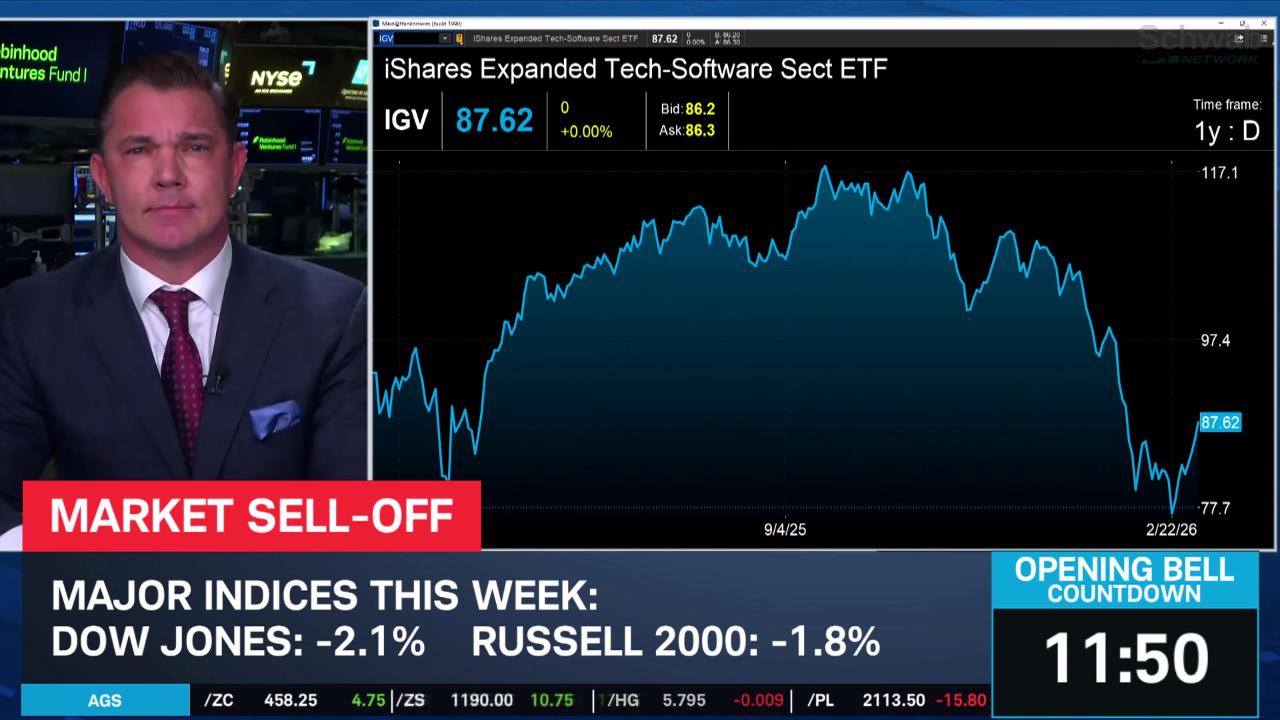

Tune in live from 8 a.m. to 5 p.m. ET, or anytime, anywhere, on‑demand.
Or stream it via thinkorswim® and thinkorswim Mobile, available through our broker-dealer affiliate, Charles Schwab & Co., Inc
Please do not reply to this email. Replies are not delivered to Schwab Network. For inquiries or comments, please email [email protected].
See how your information is protected with our privacy statement.
This material is intended for informational purposes only and should not be considered a personalized recommendation or investment advice. Investors should review investment strategies for their own particular situations before making any decisions.
Schwab Network is brought to you by Charles Schwab Media Productions Company (“CSMPC”). CSMPC is a subsidiary of The Charles Schwab Corporation and is not a financial advisor, registered investment advisor, broker-dealer, or futures commission merchant.
Charles Schwab Media Productions Company and all third parties mentioned are separate and unaffiliated, and are not responsible for one another's policies, services or opinions.
Data contained herein is obtained from what are considered reliable sources. However, its accuracy, completeness, or reliability cannot be guaranteed. All events and times listed are subject to change without notice.
1