- Market Minute
- Posts
- United States Antimony (UAMY) Revs Up Domestic Production of Critical Minerals
United States Antimony (UAMY) Revs Up Domestic Production of Critical Minerals

Maria Schrater
March 15, 2026
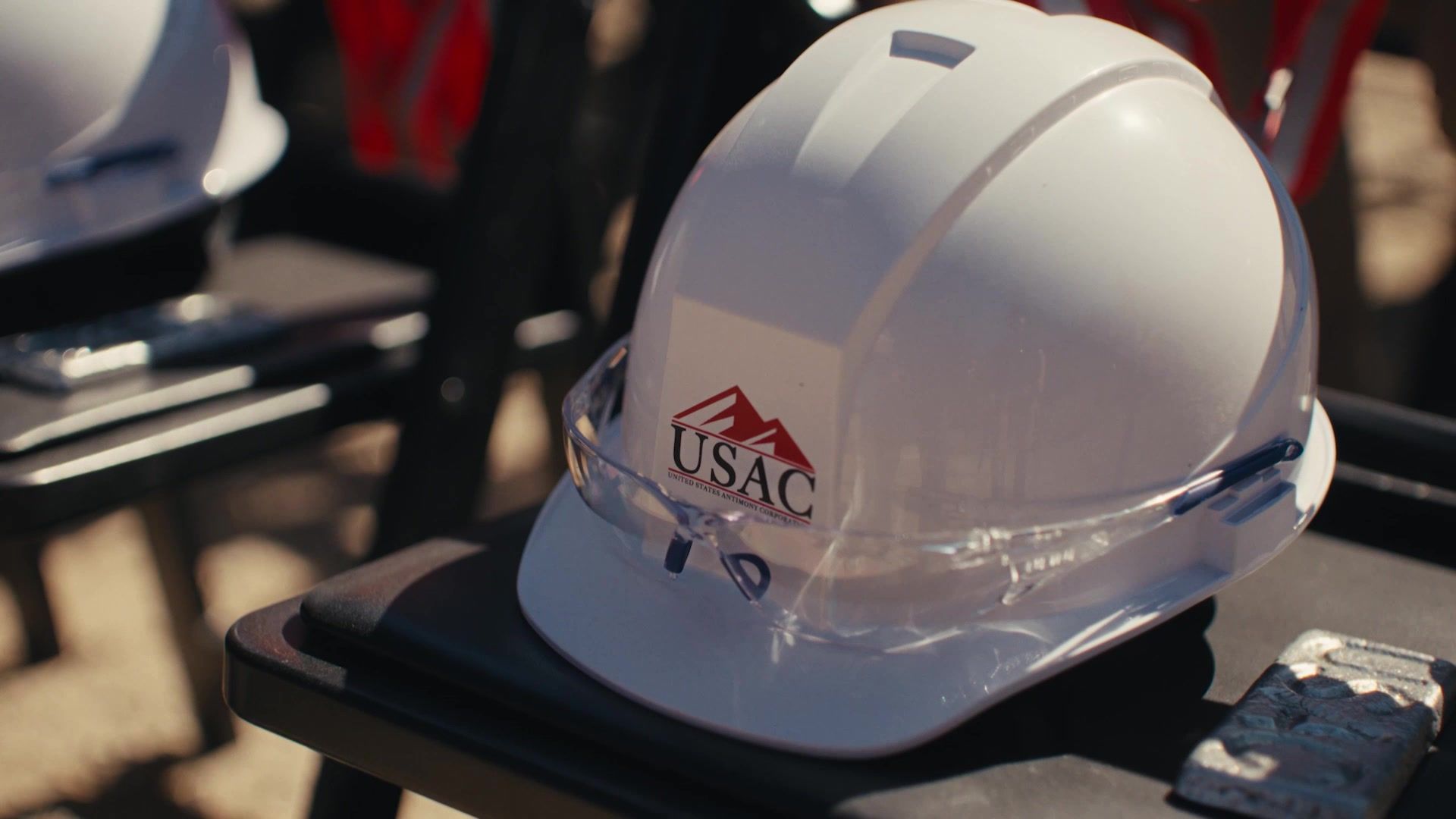
Gary Evans, CEO of United States Antimony (UAMY), rang the opening bell at the NYSE Wednesday as the company uplisted to the exchange, then joined Nicole Petallides on Schwab Network to discuss the company and the critical work it is doing to bolster domestic antimony resources.
Antimony is a necessity for a vast range of modern technologies. The metalloid (meaning it has some properties of metals) is a semiconductor but also acts as a strengthening agent in various metal alloys – it is crucial for lead-acid batteries, ammunition, and cable sheathing. According to AZO mining, 60% of antimony demand is in flame retardants, but it is also used for infrared detectors, along with glass and ceramic manufacturing, and even solar panels.
In nature, it mostly appears as stibnite, a sulfide mineral that requires a great deal of processing. Generally, the ore is crushed and then heated to around 500-600 degrees Celsius to get antimony oxide, requiring specialized facilities. Antimony exposure is also linked to health concerns, meaning safety precautions need to be built in to protect workers, as well as the surrounding area.
Like many critical minerals, China dominates antimony production, with the Center for Strategic and International Studies estimating it accounted for 48% of global production in 2024. However, Evans adds that it controls about 80% of supply. Another major producer is Russia.
This concentration has spiked prices – in October of 2025, as China set export restrictions on the mineral, prices hit over $40,000 per ton. Antimony Global lists the current price around $35,000 per ton. Evans says his phone started ringing off the hook once the export restrictions came into place.
As tensions rise across the globe, the U.S. needs to find its own supplies and build refining facilities for the metal. With the current conflict in Iran, the U.S. is under pressure to replenish its missile and ammunition stocks, further sharpening the need.
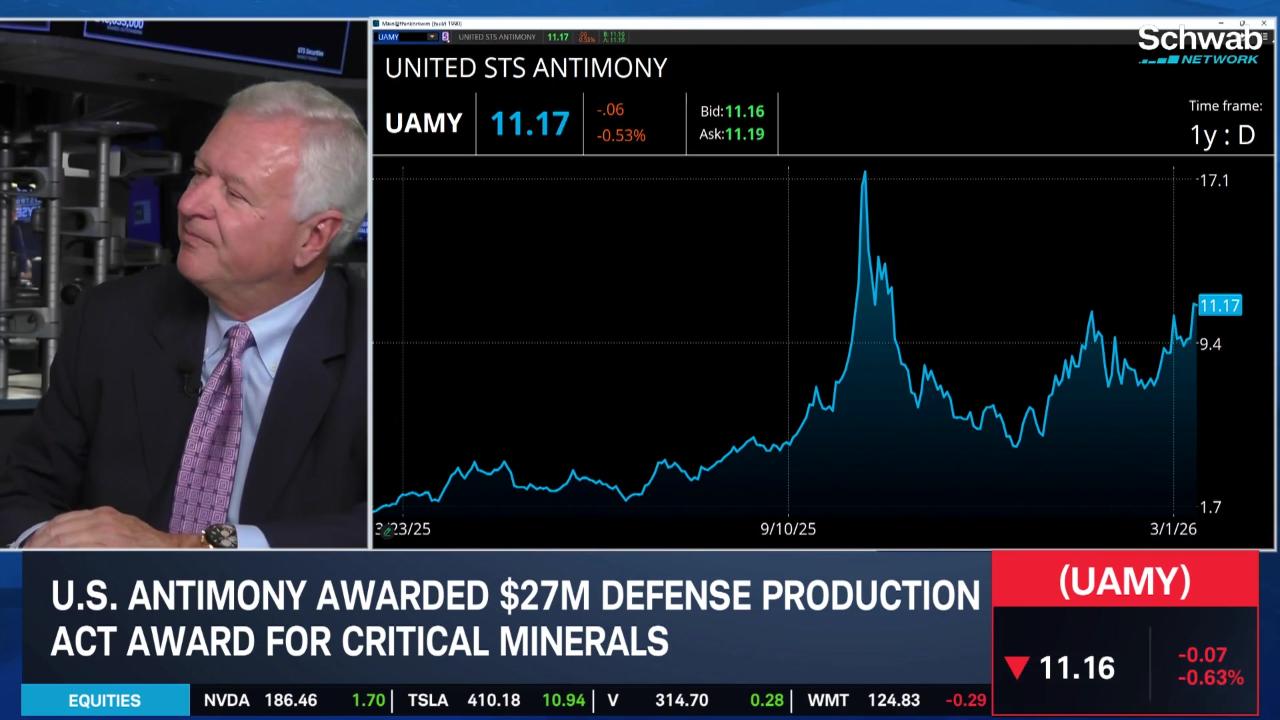
In steps United States Antimony (UAMY). The company mines and processes stibnite into antimony and says it has two of the three operating antimony smelters in North and Central America – giving it a virtual monopoly here. This week, it announced a $27 million Pentagon investment, following a previous $245 million, five-year contract it won in October of 2025.
United States Antimony is reopening its Stibnite Hill mine in Montana, which ceased operations for economic reasons in 1983. The company says a “substantial quantity” of high-grade stibnite remains. Back in October, based on their analysis of the deposits, along with other procurements, they raised their 2026 revenue guidance to $125 million, a $25 million increase.
Evans says UAMY is increasing its production by around 400% and expects to deliver around $85 million of antimony ingots in 2026 – after meeting industrial supply contracts. In addition to Montana, they are also “firing up” a facility in Mexico and are building a processing plant in Idaho to handle antimony in a joint venture with Americas Gold and Silver.
“Demand keeps going up,” Evans says, and importantly, the U.S. is changing the rules to push domestic suppliers to the forefront. Starting in 2027, U.S. government suppliers have to get raw materials from U.S. companies.
Besides antimony, they also work with zeolite, which is used in animal feed and water purification, along with tungsten, used for tanks and submarines. Evans says they will be the first tungsten developer in the U.S. after more than a decade. Their Ontario project is reportedly estimated to hold tungsten worth $4.6 billion.
Looking at their latest financial statements, in an investor presentation released February 27, the company claims revenues and gross profits were at records for both the three and nine-month period ended September 30, 2025. The nine-month revenue hit $26 million, a 182% increase vs the same period last year.
The stock is trading around $9/share right now and is below the $19.71 all-time high it hit in October 2025. While it lost ground Friday, it is up almost 500% vs last year and over 80% year-to-date.
Watch the full interview below:
Video Spotlight
Featured Clip
Tune in live from 8 a.m. to 5 p.m. ET, or anytime, anywhere, on‑demand.
Or stream it via thinkorswim® and thinkorswim Mobile, available through our broker-dealer affiliate, Charles Schwab & Co., Inc
Please do not reply to this email. Replies are not delivered to Schwab Network. For inquiries or comments, please email [email protected].
See how your information is protected with our privacy statement.
This material is intended for informational purposes only and should not be considered a personalized recommendation or investment advice. Investors should review investment strategies for their own particular situations before making any decisions.
Schwab Network is brought to you by Charles Schwab Media Productions Company (“CSMPC”). CSMPC is a subsidiary of The Charles Schwab Corporation and is not a financial advisor, registered investment advisor, broker-dealer, or futures commission merchant.
Charles Schwab Media Productions Company and all third parties mentioned are separate and unaffiliated, and are not responsible for one another's policies, services or opinions.
Data contained herein is obtained from what are considered reliable sources. However, its accuracy, completeness, or reliability cannot be guaranteed. All events and times listed are subject to change without notice.